The Top 3 Rules of Art Placement: Designer tips for any space
One of the most common questions I receive from homeowners, collectors, and business clients alike, is not what art to choose, but where to place it. Even the most beautiful artwork can lose its impact if it’s hung too high, crowded by furniture, or floating without intention.
Art doesn’t simply decorate a room, it completes it. Proper placement allows a piece to breathe, communicate, and anchor the space around it. Below are professional guidelines I use when staging fine art in both residential and commercial interiors.
Art Above Furniture: The Golden Rule of Height
When art is placed above furniture, such as a sofa, console, credenza, or bed. It should feel visually connected to that piece, not hovering above it.
The ideal distance:
Hang the bottom edge of the artwork 6–12 inches above the furniture.
This range creates a clear relationship between the art and what’s beneath it, while still giving the artwork its own presence.
Less than 6 inches can feel cramped
More than 12 inches often feels disconnected and awkward
For larger works or high-backed furniture, lean closer to 8–12 inches. For more intimate spaces, 6–7 inches usually feels refined and intentional.
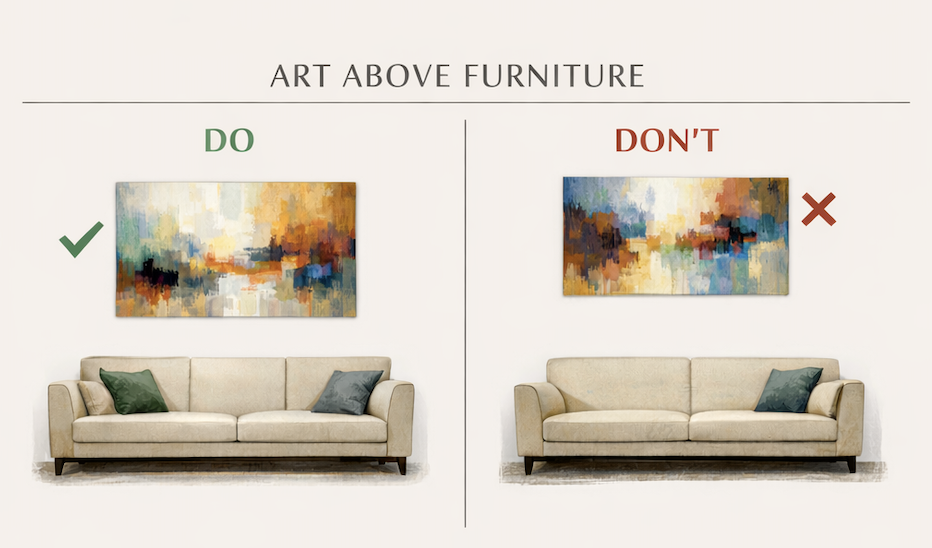
Image 1: 6-12 inches above the couch.
Image 2: More than 12 inches about the couch.
When Art Is Not Anchored to Furniture
If your artwork is not placed above furniture, such as on a feature wall, hallway, or open commercial space, its height should be determined by eye level, not ceiling height.
This is museum and gallery standard and works beautifully in most environments.
This rule ensures the art meets the viewer naturally. High ceilings do not mean higher art. Negative space above the piece is often what gives it elegance.
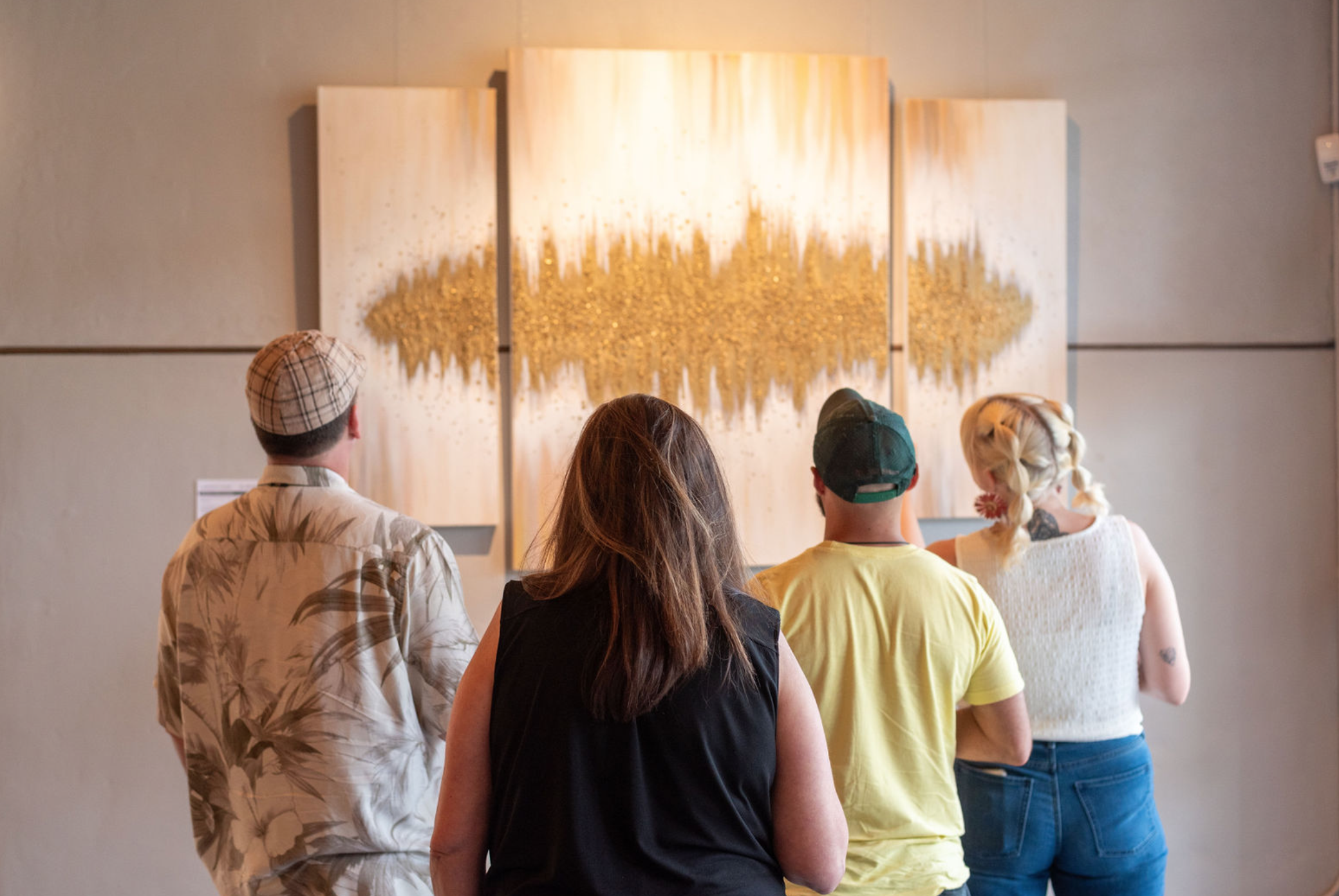
Golden Rule: The center of the
artwork should sit approximately
57–60 inches from the floor.
Distance from the Ceiling: Resist the Urge to Fill the Wall
A common mistake is hanging art too close to the ceiling in an effort to “use the space.” In reality, this diminishes the artwork’s authority.
Scale Matters More Than Quantity
When staging abstract art, scale is critical. A piece that is too small for a wall will feel timid, no matter how powerful the work itself is.
Artwork above furniture: artwork should span approximately 60–75% of the furniture width.
Abstract art thrives when it has room to speak. Let it be the focal point, not an afterthought.
Commercial Spaces: Art as Experience
In offices, hotels, restaurants, and retail environments, art placement influences mood, movement, and brand perception.
Hang slightly higher in high-traffic areas to allow for visibility at a distance
Maintain consistent center heights across multiple works for cohesion
Avoid crowding art with signage, lighting fixtures, or architectural clutter
In business settings, art should feel deliberate and never like a decorative filler.
Trust the Relationship Between Art and Space
Ultimately, ideal placement is about balance. Art should feel in conversation with the room: grounded, intentional, and alive.
When hung correctly, abstract art doesn’t just occupy a wall, it transforms space.
